18 Things Men Said After Sex That Made Women Immediately Regret Their Decision To Sleep With Them

"Whoopsie daisy!"

Hello and welcome to another episode of, "The trials and tribulations of being a straight woman." Today, we're discussing the downsides of hetero sex.

Rockstar Games

Reddit user u/Pity-Pinoy broached an important topic when they asked women on the platform to share "the dumbest thing" a guy has ever said to them after sex. Here are the most gobsmacking replies:

1. "I have a tattoo of the world on my back. This guy was banging me doggy style and pulled out to cum on my back. He then exclaimed, 'Woah, there’s a tsunami in Australia!' I fell on my face laughing so hard."

NBC

2. "He said. 'Alexa, play You’re welcome,' and the speakers from each side of his bed began to serenade us with Dwayne The Rock Johnson’s voice as Maui from Moana. Luckily we both got a pretty good laugh out of it."

tejavuu

3. "I gave a dude a blowjob and apparently he’d never cum from one before (who knows if that was true). Anyway, after he goes, 'Oh my god. That was amazing. I thought there was something wrong with me. You need to have daughters.'"

karmax7chameleon

4. "After he finished too quickly he said, 'Whoopsie daisy!'"

queenofallyourdreams

5. "He told me, with all the sincerity in the world, 'You would make a great single mother.'"

Bounce

6. "I've said a lot of stupid shit. The worst was probably, 'Do you like egg sandwiches?'"

Its-my-dick-in-a-box

7. “He said, 'Mind if I hit this?' and then he pulled out a vape pen he’d hidden under the bed. My bed. Specifically for this reason."

sharknadothree

8. "I had sex with a guy I dated for a few months and afterwards he said, 'Your vagina is smaller than other vaginas I’ve had sex with.' I wasn’t sure if it was a compliment, criticism, or a mere observation."

Thunder_Moose25

9. "I was snuggling with my boyfriend in the afterglow and I looked up at him and asked, 'What are you thinking about?' — thinking he would say something sweet. This bitch deadass looks down at me and says, 'Mud flaps.'"

10. "'Hey, don't tell anyone about last night. I get enough shit for being vegan.' A phrase that has stuck with me for 10+ years. Not so much 'dumb' as it is cruel."

hermeigh

11. "'Okay are we done?' I guess he was too afraid to ask whether or not I came and that was his way of doing it."

larrieuxa

12. "He didn’t say it, but afterwards he grabbed his phone and went on a tracking app and tracked that he had sex that day."

seeshawshow

13. "Cuddling in the afterglow, he's gazing adoringly at my nude body, and whispers...'I've just never seen boobs as small as yours.'"

14. "My partner will sometimes slap my ass afterwards and say, 'Good game!'"

ixnay_ixpay

15. "Dude tried to give me a compliment by saying I have 'plump pussy lips.' Dude did not realize that was borderline weird to say."

soggypapad

16. "I was cuddling a guy after sex one time and he told me he was 'leaking testosterone all over me.'"

d3646262

17. "After sex, my guy collapsed on top of me. When he pulled back, our sweaty chests somehow made a small suction squelch noise. His romantic next words? 'Hehehe boob farts.'"

18. And finally, "I think I miss my ex."

katz332

Some submissions have been edited for length and/or clarity.

Share This Article

What do you think?

  • 9
  • 3
  • 1

8 comments

Order by:
  • 2 hours ago
    Some of these were actually funny. The best sex does actually involve laughter sometimes.
    10
  • 2 hours ago
    My husband and I will get intense and say the "I love you" after and all that, but sometimes, man, we just have a laugh. One of our favorites after we're spent is "good night," and it's like, 3 in the afternoon. Or we open the door and say "who's the pervert?" We have 2 cats and a...
    4
  • 1 hour ago
    The whoopsie daisy one was endearing. Better than some of the garbage guys say
    1

Fully Vaccinated International Travelers Will Be Allowed To Enter The US Starting November 8

Travelers will be required to show proof of vaccination and a negative COVID test taken within three days of departure.

Posted on October 15, 2021, at 11:44 a.m. ET

Sopa Images / SOPA Images / LightRocket via Getty Images

Fully vaccinated international travelers will be permitted to enter the US starting Nov. 8, White House officials said Friday.

The announcement marks a major turning point in the pandemic, particularly for those with loved ones in other countries who now may be able to reunite in time for the holiday season.

Travelers will be required to show proof of vaccination, and additional guidance will be made public soon. Limited exceptions, which have not yet been specified, will be made for some unvaccinated individuals.

Accepted vaccines will include any that are currently approved for use in the US, as well as those authorized for emergency use by the World Health Organization, which are more widely used in other countries. This does not yet include Russia’s Sputnik V vaccine, which the WHO is still reviewing, or India’s Bharat Biotech.

Additionally, travelers will be still be required to show a negative taken within three days of their travel to the US.

Last month, the Biden administration announced that travel restrictions would be lifted for fully vaccinated people starting in early November but did not specify the date until Friday.

"This individual-based approach rather than country-based one is the right system," White House pandemic czar Jeff Zients said in September. "International travel is critical to connecting families and friends, to fueling small and large businesses, to promoting the open exchange ideas of culture."

Why does the internet keep breaking?

By Joe Tidy
Cyber reporter, BBC News

Published
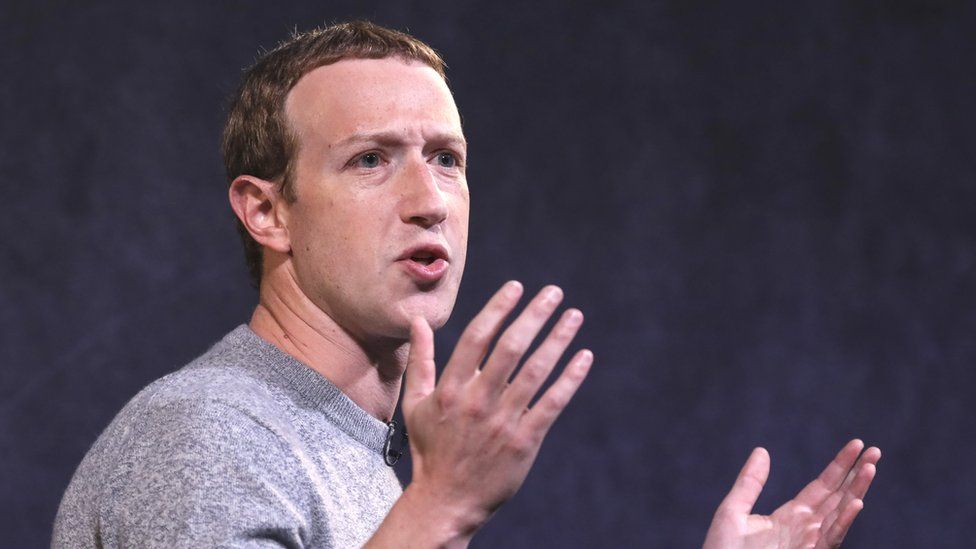
Facebook CEO Mark Zuckerberg speaks about the new Facebook News feature at the Paley Center For Media on October 25, 2019 in New York City.IMAGE SOURCE,GETTY IMAGES
Image caption,Facebook chief executive Mark Zuckerberg apologised for the company's most recent service breakdown

I doubt Mark Zuckerberg reads the comments people leave on his Facebook posts.

But, if he did, it would take him approximately 145 days, without sleep, to wade through the deluge of comments left for him after he apologised for the meltdown of services last week.

"Sorry for the disruption today" the Facebook founder and chief executive posted, following almost six hours of Facebook, WhatsApp and Instagram being offline.

Facebook blamed a routine maintenance job for the disruption - its engineers had issued a command that unintentionally disconnected Facebook data centres from the wider internet.

Around 827,000 people responded to Mr Zuckerberg's apology.

The messages ranged from the amused: "It was terrible, I had to talk to my family," commented one Italian user, to the confused: "I took my phone into the repair shop thinking it was broken," wrote someone from Namibia.

And, of course, the very upset and angry: "You cannot have everything shutdown at the same time. The impact is unprecedented," one Nigerian businessman posted. Another from India asked for compensation for the disruption to their business.

ADVERTISEMENT

What is clear now, if it wasn't obvious already, is just how reliant billions of people have become on these services - not just for fun but also for essential communication and trading.

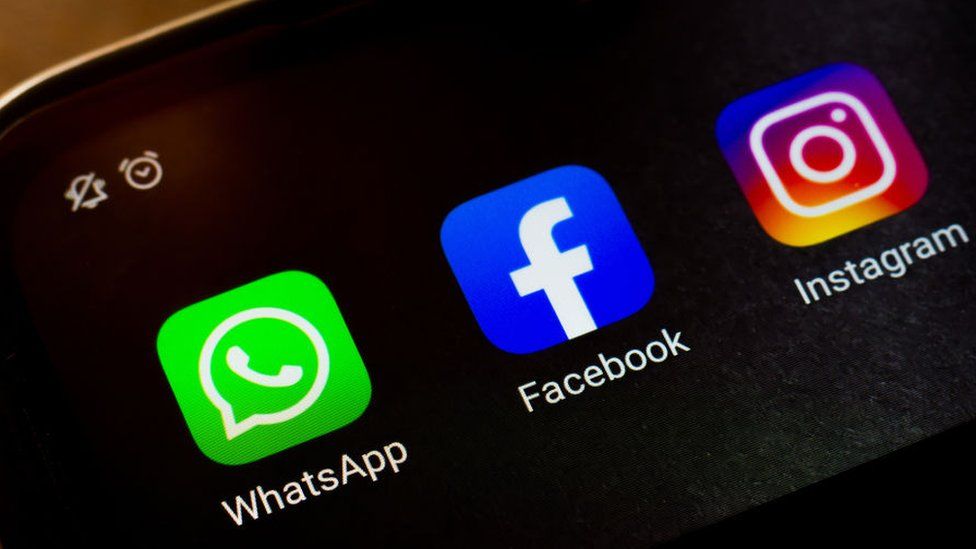
In this photo illustration a WhatsApp, Facebook and Instagram app seen displayed on a smartphone.IMAGE SOURCE,GETTY IMAGES
Image caption,Many businesses now rely heavily on Facebook services like WhatsApp and Instagram to stay in touch with customers

What is also clear, is that this is far from being a one-off situation: experts suggest widespread outages are becoming more frequent and more disruptive.

"One of the things that we've seen in the last several years is an increased reliance on a small number of networks and companies to deliver large portions of Internet content," says Luke Deryckx, Chief Technical Officer at Down Detector.

"When one of those, or more than one, has a problem, it affects not just them, but hundreds of thousands of other services," he says. Facebook, for instance, is now used to sign-in to a range of different services and devices, such as smart televisions.

"And so, you know, we have these sort of internet 'snow days' that happen now," Mr Deryckx says. "Something goes down [and] we all sort of look at each other like 'well, what are we going to do?'"

Mr Deryckx and his team at Down Detector, monitor web services and websites for disruption. He says that widespread outages affecting major services are becoming more frequent and more serious.

"When Facebook has a problem, it creates such a big impact for the internet but also the economy, and, you know...society. Millions, or potentially hundreds of millions, of people are just sort of sitting around waiting for a small team in California to fix something. It's an interesting phenomena that has grown in the last couple of years."

Presentational grey line

Significant meltdowns

  • October 2021: A "configuration error" brought down Facebook, Instagram and WhatsApp for nearly 6 hours. Other sites like Twitter were also disrupted due to the surge of new visits to their apps.
  • July 2021: Over 48 services, including: Airbnb, Expedia, Home Depot, Salesforce were down for around an hour after a bug with the Domain Name System (DNS) at content delivery company Akamai. It follows a similar outage at the company a month earlier.
  • June 2021: Amazon, Reddit, Twitch, Github, Shopify, Spotify, several news sites were down for around an hour after a previously unknown bug was triggered accidentally by a customer at cloud computing service provider Fastly.
  • December 2020: Gmail, YouTube, Google Drive and other Google services went down simultaneously for around 90 minutes after the company said it encountered an "internal storage quota issue".
  • November 2020: A technical problem with one of Amazon Web Service's facility in Virginia, USA, impacted thousands of third-party online services for several hours, mostly in North America.
  • March 2019: Facebook, Instagram and WhatsApp all went down or were severely disrupted for around 14 hours after a "server configuration change". Some other sites, including Tinder and Spotify, that use Facebook for logins, were also affected.
Presentational grey line

Inevitably, at some stage, during a large outage of services, people worry that the disruption is the result of some sort of cyber-attack.

But experts suggest, more often than not, it's down to a more mundane case of human error, compounded, they say, by the way the internet is held together with a complex set of outdated and fiddly systems.

During the Facebook outage, experts joked on social media platform, Twitter that some of the usual suspects, or reasons for outage problems are "older than the Spice Girls" and "designed on the back of a napkin".

Presentational grey line

Internet scientist Professor Bill Buchanan agrees with this characterisation: "The internet isn't the large-scale distributed network that DARPA (the Defense Advanced Research Projects Agency), the original architects of the internet, tried to create, which could withstand a nuclear-strike on any part of it.

"The protocols it uses are basically just the ones that were drafted when we connected to mainframe computers from dumb terminals. A single glitch in its core infrastructure can bring the whole thing crashing to the floor."

Professor Buchanan says improvements can be made to make the internet more resilient, but that many of the fundamentals of the net are here to stay for better or worse.

"In general, the systems work and you can't just switch certain protocols of the internet 'off' for a day, to try to remake them," he says.

Global communication network concept.IMAGE SOURCE,GETTY IMAGES
Image caption,Experts says internet services have become too centralised

Instead of trying to rebuild the systems and structure of the internet, Professor Buchanan thinks we need to improve the way we use it to store and share data, or risk more mass outages in the future.

He argues that the internet has become too centralised, i.e. where too much data comes from a single source. That trend needs to be reversed with systems that have multiple nodes, he explains, so that no one failure can stop a service from working.

There is a silver lining here. Although significant internet outages affect users lives and businesses they can also, ultimately, help to improve the resilience of the internet and the web services plugged into it.

For example, Forbes estimates that Facebook lost $66m (£48.5m), during the six-hour outage, from the suspension, or exodus, of advertisers on the site. That sort of loss is likely to focus the minds of senior executives on preventing it happening again.

"They lost a huge amount of money in that day, not just in their stock price but in their operational revenues," according to Mr Deryckx. "And if you look at outages caused by content delivery networks like Fastly and Cloudflare, they also lost a huge number of customers to the competition. So, I think these operators are doing everything they can to keep things online."

Bake A Dog Bone Business

https://www.submissionmonster.com">SubmissionMonster.com